🎙️ Listen to this Podcast.
In this episode of Remarkable World Commentary Donna opens with her favorite quote, “Speak in such a way that others love to listen to you, and listen in such a way that others love to speak to you”, followed by her monthly word game pairing respect vs. disrespect (respect is earned, never given) and courteous vs. condescend (the fine line between thoughtful responses and careless, hurtful ones). She also flags a technical note: her Gmail is temporarily broken, so listeners should write to her at donnajodhan@sterlingcreations.ca.
The heart of the episode is three advocacy-in-action stories, each analyzed through her standard framework of what, who, why, how, and when. In Scotty’s story, a vision-impaired boy denied entry to a park to ride his scooter is defended by his elder brother Damien, who refuses to back down, rallies the parents, and turns the confrontation into a community conversation. In Karen’s story, a blind woman is turned away from a knitting class by a teacher unwilling to adapt, but the teaching assistant quietly follows her out and steps in as mediator, modeling advocacy as negotiation. In the third story, three disabled would-be potters rejected by a studio craft a viral Facebook post and successfully find an inclusive instructor, a lesson in the power of collective voice and social media. Donna weaves in her own pottery journey (she’s been welcomed by Sean Kelly’s Studio on the Hill and Joan Spears’s Pleasant Potteries, but was refused twice elsewhere), and closes with warm April wishes.
TRANSCRIPT
Podcast Commentator: Greetings, Donna J. Jodhan, LLB, ACSP and MBA invites you to listen to her biweekly podcast, Remarkable World Commentary. Here, Donna shares some of her innermost thoughts, insights, perspectives, and more with her listeners. Donna focuses on topics that directly affect the future of kids, especially kids with disabilities. Donna is a blind advocate, author, sight loss coach, dinner mystery producer, writer, entrepreneur, law graduate, and podcast commentator. She has decades of lived experiences, knowledge, skills, and expertise in access, technology and information. As someone who has been internationally recognized for her work and roles, she just wants to make things better than possible.
Donna J. Jodhan, LLB, ACSP, MBA: Hello there, and I’m Donna J. Jodhan, welcoming you to my Ask Advocate Donna for the month of April 2026. Hope everybody is doing well. And for this month I have lots to share with you. So let’s get going. And I want to start with one of my favorite quotations. And it is this. Speak in such a way that others love to listen to you and listen in such a way. That others love to speak to you. Very powerful quote. And I want to start my my podcast with my little word game. And I want to thank those for having commented on it. And again, if you’d like to write to me at any given time, please do so at Donna Jordan at sterling creations.ca. That’s Donna Jordan at sterling creations.ca. Okay, my gmail account is presently having some problems, but I hope to get it fixed very soon. Okay, let’s look at the first pair of words respect versus disrespect. And in the case of an advocate, we want to ensure that we earn our respect because respect is never, ever given. It is earned versus disrespect. We don’t want to be known as a person who is either disrespected or a person who disrespects others. So you got respect versus disrespect. Choose respect. Okay. Respect is when you give respect, and respect is when you gain respect. Okay. All right. How about the pair of words courteous versus condescend? You know, a lot of people these days are so very, very, I would say, aware of these two words, courteous and condescend.
Donna J. Jodhan, LLB, ACSP, MBA: Courteous is when you take the time to give a very thoughtful response to someone or something. Condescend is when you are careless in your response, either via email or via face to face or via virtually. Be very careful. There’s somewhat of a fine line between courteous and condescending. Again, courteous is when you take the time to be thoughtful in your response to the one that you’re giving it to. Condescend is when you become careless and you say words that hurt others. Okay, that’s my word game for this month, so let’s move on. I have three stories to share with you, stories that have been sent in to me by others, and stories that I myself have lived. So let’s look at story one. Okay? A kid who has been denied entry to a park to ride his scooter. And here is the story. Scotty. Little Scotty really wanted to ride his scooter in a park. Okay. Scotty was vision impaired, but his elder brother Damien, said that he would go along with Scotty, his little brother, and ride together with him. At the entrance to the park, Scotty was told that he could not ride his scooter by an attendant. When the attendant or when Damien, the elder brother, told the attendant that he would be riding with his little brother. The attendant became extremely angry and began to shout at the boys. Scotty started to retreat with tears in his eyes, but Damian stood his ground and he told his or told the attendant that he would be returning with his parents.
Donna J. Jodhan, LLB, ACSP, MBA: And he did just that. The parents, the boys and the attendant all gathered together to have a cosy little chart, and other kids started to crowd around. What happened next? What do you think would have happened next? This is advocacy in action, folks. This is live advocacy. Okay. What is advocacy in this case, advocacy is when these boys, Damian taking the lead, decides to advocate for his little brother Scotty, because the attendant would not let Scotty in to ride his scooter. Okay. And who gets involved in advocacy? Damien, Scotty, the parents, the attendant, and then other kids. Okay. And why is it necessary in this case? It is necessary because the attendant refuses to let little Scotty ride his bicycle in the park. That’s why advocacy is necessary. And how does one get involved in advocacy? You do it the way that Damien did first, by standing up to the attendant and then getting his parents involved, and then other kids, and then everyone gathering around for a cozy little church, cozy little chat. Sorry. When do you get involved in advocacy? When an issue directly affects you. Okay, here is the second story that I share with you for this month. Okay. A teacher refuses to teach a blind lady how to knit. This is one of the more common incidents that occur in our society today.
Donna J. Jodhan, LLB, ACSP, MBA: It is getting better, but it’s still there. And here is the story. Karen was told by the teacher of her knitting class that she could not participate. Because the teacher did not know how to teach her as a blind knitter. The teacher’s assistant had offered to help, but the teacher was extremely steadfast. So Karen decided to leave and the assistant had followed her out and they had had a discussion. What do you think that discussion could have been? All right. Could it have been the assistant saying, you know, I think you’re doing the right thing by just leaving the class or the assistant saying, okay, Karen, I will help you. Okay. The assistant probably did not criticize the teacher, but tried to patch things up, which I think did happen. What is advocacy here? And again, who is leading the charge from this picture? It appears that the assistant is because for. Whereas Karen left the class. The assistant followed her out and they had a discussion. Hopefully, and I think it did work out like this. The discussion was the assistant offering her assistant assistance and also offering to try and navigate this rough landscape between Karen and the teacher. So she wanted to negotiate. She wanted to engage and communicate. She was the main advocate. Okay. And who got involved in advocacy? In this case, it was the assistant who did. So why was advocacy necessary? Because the assistant saw that there was a problem here or a challenge here, and she wanted to be helpful.
Donna J. Jodhan, LLB, ACSP, MBA: She wanted to be a mediator between Karen and her teacher. Good sir. How to get involved in advocacy in this case. Exactly how the assistant did it, by going out and following Karen and having a chat with her. When do you get involved in advocacy? You do. So when you think that something needs to be fixed and it is an issue near and dear to your heart. Okay. Excuse me. And here is my third story for this month. Okay. Story three. One that was shared with us. Okay. All right. A pottery studio that is closed to students with disabilities. And as an avid potter myself, I will tell you that I have seen instances where pottery studios, you know, refuse to take persons with disabilities. I’ve been extremely lucky. I’ve had two wonderful studios. One is called studio on the Hill by and run by Sean Kelly, and another one was Pleasant Potteries, run by a wonderful lady called Joan Spears. However, I was refused twice by pottery studios who did not want to teach me how to do pottery because I was vision impaired. All right. Here’s a story. This pottery studio refused to accept students with various disabilities. These students all knew each other, and they decided to do something about it. They came together and crafted a Facebook post, and they posted their post asking for anyone who could help them, any studio or any instructor who could help them to, you know, pursue their pottery pursuits.
Donna J. Jodhan, LLB, ACSP, MBA: And to find a studio to accept students with disabilities. You know what? This worked. That’s the power of Facebook. Okay. So here we go now. What is advocacy all about? And in this case, we have the three persons with disabilities who knew each other coming together, crafting a very catchy Facebook post and putting it up on Facebook. Okay. And who got involved in advocacy. These three persons who were directly affected by what was going on. Why was it necessary here? I think everyone would agree it was necessary because these three persons were being denied the opportunity to engage in pottery by studios who did not want to accept them because of their disabilities. How do you get involved in advocacy? Again, coming together as these three students did. And when do you get involved in advocacy? When the problem directly affects you and those close to you. Okay, so there you have it. My three stories for this month from my feature Ask Advocate Donna for the month of April. Want to write to me? Please do so at Donna Jordan at Sterling creations.ca. That’s STERLINGCREATIONS dot C a. So it’s Donna Jordan, DONNEODHAN. Hopefully by next month, my gmail account would be fixed, and we will be back to regular operations. In the meantime, everybody, thank you for tuning in and listening in. I wish you a great rest of the month of April. Take care.
Podcast Commentator: Donna wants to hear from you and invites you to write to her at DonnaJodhan@@gmail.com. Until next time.
Donna J. Jodhan, LLB, ACSP, MBA
Global Leader In Disability Rights, Digital Accessibility, And Inclusive Policy Reform
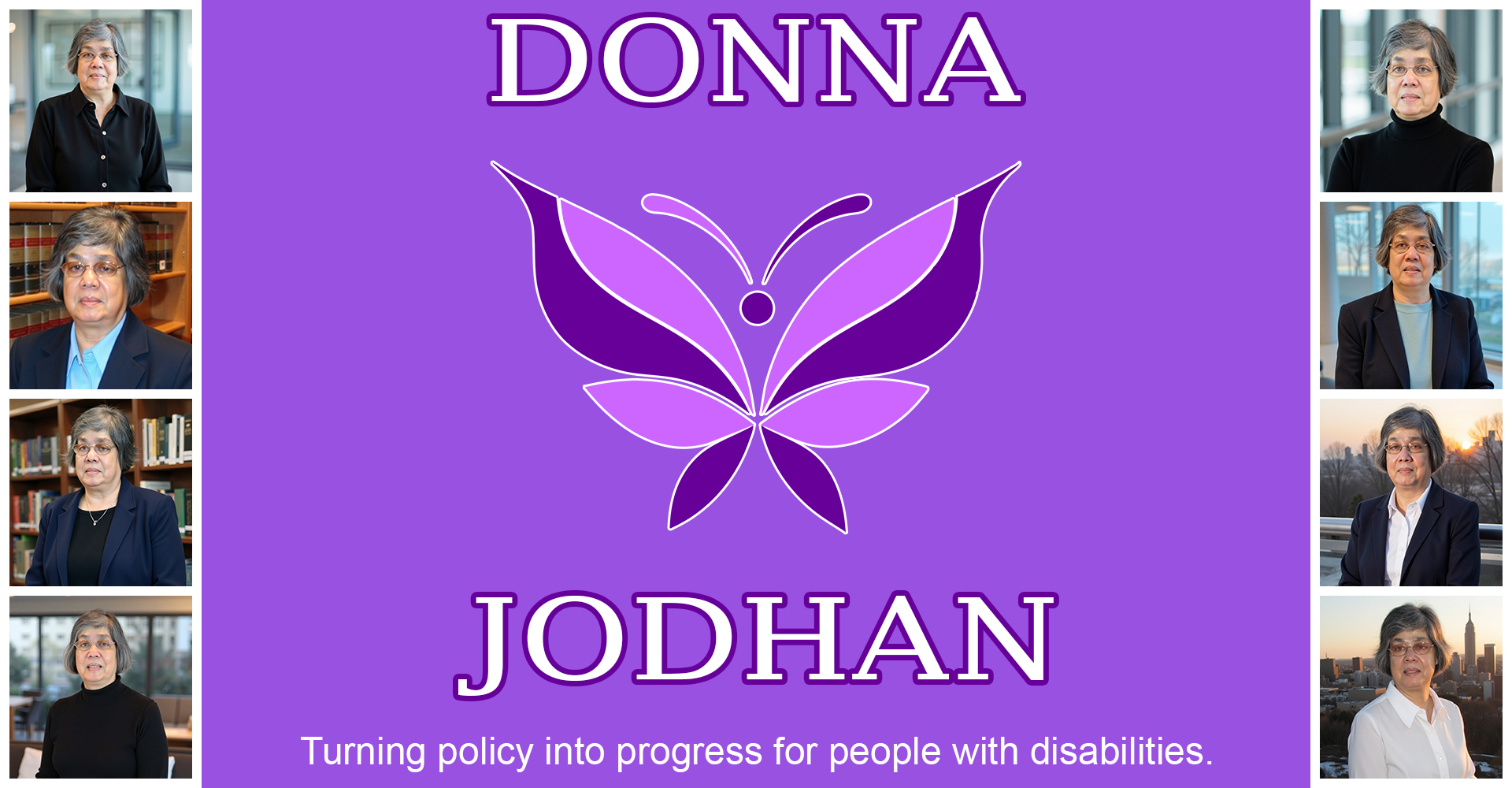
Turning policy into progress for people with disabilities.


Connect With Me:
🌍 Website: https://donnajodhan.com
📧 Email: donna@donnajodhan.com
✏️ Blog (1): https://donnajodhan.com/blog
✏️ Blog (2): https://donnajodhan.com/sterling1
✏️ Blog (3): https://donnajodhan.com/sterling2
✏️ Blog (4): https://donnajodhan.com/blogspot
🛒 Etsy: https://donnajodhan.com/etsy
🎙️ Podcasts (Web): https://donnajodhan.com/podcasts
🎙️ Podcasts (Apple): https://donnajodhan.com/podcasts-apple
🎙️ Podcasts (Amazon): https://donnajodhan.com/podcasts-amazon
🎙️ Podcasts (Spotify): https://donnajodhan.com/podcasts-spotify
🎙️ Podcasts (iHeart): https://donnajodhan.com/podcasts-iheart-radio
💬 Facebook: https://donnajodhan.com/facebook
💬 LinkedIn: https://donnajodhan.com/linkedin
💬 X1 (Formerly Twitter): https://donnajodhan.com/x1
💬 X2 (Formerly Twitter): https://donnajodhan.com/x2
📽️ YouTube: https://donnajodhan.com/youtube
🛜 RSS: https://donnajodhan.com/feed
Related
Remarkable World Commentary Episode #84: Ask Advocate Donna
🎙️ Listen to this Podcast.
In this episode of Remarkable World Commentary Donna opens with her favorite quote, “Speak in such a way that others love to listen to you, and listen in such a way that others love to speak to you”, followed by her monthly word game pairing respect vs. disrespect (respect is earned, never given) and courteous vs. condescend (the fine line between thoughtful responses and careless, hurtful ones). She also flags a technical note: her Gmail is temporarily broken, so listeners should write to her at donnajodhan@sterlingcreations.ca.
The heart of the episode is three advocacy-in-action stories, each analyzed through her standard framework of what, who, why, how, and when. In Scotty’s story, a vision-impaired boy denied entry to a park to ride his scooter is defended by his elder brother Damien, who refuses to back down, rallies the parents, and turns the confrontation into a community conversation. In Karen’s story, a blind woman is turned away from a knitting class by a teacher unwilling to adapt, but the teaching assistant quietly follows her out and steps in as mediator, modeling advocacy as negotiation. In the third story, three disabled would-be potters rejected by a studio craft a viral Facebook post and successfully find an inclusive instructor, a lesson in the power of collective voice and social media. Donna weaves in her own pottery journey (she’s been welcomed by Sean Kelly’s Studio on the Hill and Joan Spears’s Pleasant Potteries, but was refused twice elsewhere), and closes with warm April wishes.
TRANSCRIPT
Podcast Commentator: Greetings, Donna J. Jodhan, LLB, ACSP and MBA invites you to listen to her biweekly podcast, Remarkable World Commentary. Here, Donna shares some of her innermost thoughts, insights, perspectives, and more with her listeners. Donna focuses on topics that directly affect the future of kids, especially kids with disabilities. Donna is a blind advocate, author, sight loss coach, dinner mystery producer, writer, entrepreneur, law graduate, and podcast commentator. She has decades of lived experiences, knowledge, skills, and expertise in access, technology and information. As someone who has been internationally recognized for her work and roles, she just wants to make things better than possible.
Donna J. Jodhan, LLB, ACSP, MBA: Hello there, and I’m Donna J. Jodhan, welcoming you to my Ask Advocate Donna for the month of April 2026. Hope everybody is doing well. And for this month I have lots to share with you. So let’s get going. And I want to start with one of my favorite quotations. And it is this. Speak in such a way that others love to listen to you and listen in such a way. That others love to speak to you. Very powerful quote. And I want to start my my podcast with my little word game. And I want to thank those for having commented on it. And again, if you’d like to write to me at any given time, please do so at Donna Jordan at sterling creations.ca. That’s Donna Jordan at sterling creations.ca. Okay, my gmail account is presently having some problems, but I hope to get it fixed very soon. Okay, let’s look at the first pair of words respect versus disrespect. And in the case of an advocate, we want to ensure that we earn our respect because respect is never, ever given. It is earned versus disrespect. We don’t want to be known as a person who is either disrespected or a person who disrespects others. So you got respect versus disrespect. Choose respect. Okay. Respect is when you give respect, and respect is when you gain respect. Okay. All right. How about the pair of words courteous versus condescend? You know, a lot of people these days are so very, very, I would say, aware of these two words, courteous and condescend.
Donna J. Jodhan, LLB, ACSP, MBA: Courteous is when you take the time to give a very thoughtful response to someone or something. Condescend is when you are careless in your response, either via email or via face to face or via virtually. Be very careful. There’s somewhat of a fine line between courteous and condescending. Again, courteous is when you take the time to be thoughtful in your response to the one that you’re giving it to. Condescend is when you become careless and you say words that hurt others. Okay, that’s my word game for this month, so let’s move on. I have three stories to share with you, stories that have been sent in to me by others, and stories that I myself have lived. So let’s look at story one. Okay? A kid who has been denied entry to a park to ride his scooter. And here is the story. Scotty. Little Scotty really wanted to ride his scooter in a park. Okay. Scotty was vision impaired, but his elder brother Damien, said that he would go along with Scotty, his little brother, and ride together with him. At the entrance to the park, Scotty was told that he could not ride his scooter by an attendant. When the attendant or when Damien, the elder brother, told the attendant that he would be riding with his little brother. The attendant became extremely angry and began to shout at the boys. Scotty started to retreat with tears in his eyes, but Damian stood his ground and he told his or told the attendant that he would be returning with his parents.
Donna J. Jodhan, LLB, ACSP, MBA: And he did just that. The parents, the boys and the attendant all gathered together to have a cosy little chart, and other kids started to crowd around. What happened next? What do you think would have happened next? This is advocacy in action, folks. This is live advocacy. Okay. What is advocacy in this case, advocacy is when these boys, Damian taking the lead, decides to advocate for his little brother Scotty, because the attendant would not let Scotty in to ride his scooter. Okay. And who gets involved in advocacy? Damien, Scotty, the parents, the attendant, and then other kids. Okay. And why is it necessary in this case? It is necessary because the attendant refuses to let little Scotty ride his bicycle in the park. That’s why advocacy is necessary. And how does one get involved in advocacy? You do it the way that Damien did first, by standing up to the attendant and then getting his parents involved, and then other kids, and then everyone gathering around for a cozy little church, cozy little chat. Sorry. When do you get involved in advocacy? When an issue directly affects you. Okay, here is the second story that I share with you for this month. Okay. A teacher refuses to teach a blind lady how to knit. This is one of the more common incidents that occur in our society today.
Donna J. Jodhan, LLB, ACSP, MBA: It is getting better, but it’s still there. And here is the story. Karen was told by the teacher of her knitting class that she could not participate. Because the teacher did not know how to teach her as a blind knitter. The teacher’s assistant had offered to help, but the teacher was extremely steadfast. So Karen decided to leave and the assistant had followed her out and they had had a discussion. What do you think that discussion could have been? All right. Could it have been the assistant saying, you know, I think you’re doing the right thing by just leaving the class or the assistant saying, okay, Karen, I will help you. Okay. The assistant probably did not criticize the teacher, but tried to patch things up, which I think did happen. What is advocacy here? And again, who is leading the charge from this picture? It appears that the assistant is because for. Whereas Karen left the class. The assistant followed her out and they had a discussion. Hopefully, and I think it did work out like this. The discussion was the assistant offering her assistant assistance and also offering to try and navigate this rough landscape between Karen and the teacher. So she wanted to negotiate. She wanted to engage and communicate. She was the main advocate. Okay. And who got involved in advocacy? In this case, it was the assistant who did. So why was advocacy necessary? Because the assistant saw that there was a problem here or a challenge here, and she wanted to be helpful.
Donna J. Jodhan, LLB, ACSP, MBA: She wanted to be a mediator between Karen and her teacher. Good sir. How to get involved in advocacy in this case. Exactly how the assistant did it, by going out and following Karen and having a chat with her. When do you get involved in advocacy? You do. So when you think that something needs to be fixed and it is an issue near and dear to your heart. Okay. Excuse me. And here is my third story for this month. Okay. Story three. One that was shared with us. Okay. All right. A pottery studio that is closed to students with disabilities. And as an avid potter myself, I will tell you that I have seen instances where pottery studios, you know, refuse to take persons with disabilities. I’ve been extremely lucky. I’ve had two wonderful studios. One is called studio on the Hill by and run by Sean Kelly, and another one was Pleasant Potteries, run by a wonderful lady called Joan Spears. However, I was refused twice by pottery studios who did not want to teach me how to do pottery because I was vision impaired. All right. Here’s a story. This pottery studio refused to accept students with various disabilities. These students all knew each other, and they decided to do something about it. They came together and crafted a Facebook post, and they posted their post asking for anyone who could help them, any studio or any instructor who could help them to, you know, pursue their pottery pursuits.
Donna J. Jodhan, LLB, ACSP, MBA: And to find a studio to accept students with disabilities. You know what? This worked. That’s the power of Facebook. Okay. So here we go now. What is advocacy all about? And in this case, we have the three persons with disabilities who knew each other coming together, crafting a very catchy Facebook post and putting it up on Facebook. Okay. And who got involved in advocacy. These three persons who were directly affected by what was going on. Why was it necessary here? I think everyone would agree it was necessary because these three persons were being denied the opportunity to engage in pottery by studios who did not want to accept them because of their disabilities. How do you get involved in advocacy? Again, coming together as these three students did. And when do you get involved in advocacy? When the problem directly affects you and those close to you. Okay, so there you have it. My three stories for this month from my feature Ask Advocate Donna for the month of April. Want to write to me? Please do so at Donna Jordan at Sterling creations.ca. That’s STERLINGCREATIONS dot C a. So it’s Donna Jordan, DONNEODHAN. Hopefully by next month, my gmail account would be fixed, and we will be back to regular operations. In the meantime, everybody, thank you for tuning in and listening in. I wish you a great rest of the month of April. Take care.
Podcast Commentator: Donna wants to hear from you and invites you to write to her at DonnaJodhan@@gmail.com. Until next time.
Donna J. Jodhan, LLB, ACSP, MBA
Global Leader In Disability Rights, Digital Accessibility, And Inclusive Policy Reform
Turning policy into progress for people with disabilities.
Connect With Me:
🌍 Website: https://donnajodhan.com
📧 Email: donna@donnajodhan.com
✏️ Blog (1): https://donnajodhan.com/blog
✏️ Blog (2): https://donnajodhan.com/sterling1
✏️ Blog (3): https://donnajodhan.com/sterling2
✏️ Blog (4): https://donnajodhan.com/blogspot
🛒 Etsy: https://donnajodhan.com/etsy
🎙️ Podcasts (Web): https://donnajodhan.com/podcasts
🎙️ Podcasts (Apple): https://donnajodhan.com/podcasts-apple
🎙️ Podcasts (Amazon): https://donnajodhan.com/podcasts-amazon
🎙️ Podcasts (Spotify): https://donnajodhan.com/podcasts-spotify
🎙️ Podcasts (iHeart): https://donnajodhan.com/podcasts-iheart-radio
💬 Facebook: https://donnajodhan.com/facebook
💬 LinkedIn: https://donnajodhan.com/linkedin
💬 X1 (Formerly Twitter): https://donnajodhan.com/x1
💬 X2 (Formerly Twitter): https://donnajodhan.com/x2
📽️ YouTube: https://donnajodhan.com/youtube
🛜 RSS: https://donnajodhan.com/feed
Share this:
Like this:
Related
Published in Remarkable World Commentary