
Welcome to the Curb to Cabin Canada Podcast By Donna J. Jodhan
Every flight begins long before the aircraft door. It begins at the curb.
Curb to Cabin Canada is a Canadian interview podcast by Donna J. Jodhan about what actually happens to blind and low-vision passengers when they fly, and about the airlines, airports, agencies and contractors responsible for each part of that journey.
Introduction
Canadian coverage of accessible air travel is dominated by damaged wheelchairs. That story matters. But it is not the whole story, and it is not our community’s story.
The failures that strand a blind traveller are different, and they are quieter. Information you cannot reach. Signage you cannot read. A check-in kiosk you cannot use. A gate change announced only on a screen. And, again and again, a handoff between two organizations where nobody is expecting you.
Those failures are documented in Canada’s own regulatory record. Almost nobody is reporting them. Curb to Cabin Canada exists to change that.
About the Podcast
Each episode follows one part of the air travel journey, from the curb outside the terminal to the seat in the cabin, and puts a straightforward question to the organization responsible for that stretch: is this working?
Guests include Canadian airlines, airport authorities, federal agencies, ground-handling companies, accessibility specialists, and the disability organizations that advocate for change. The programme is built on the public record, published accessibility plans, regulatory decisions, and the documented experiences of blind travellers, so that every question asked on air can be checked by anyone listening.
The programme may in time widen beyond air travel to other services that make up a blind person’s journey, because the trip does not begin at the airport door.
Curb to Cabin Canada does not publish to a fixed schedule. It is not weekly, fortnightly or monthly. Episodes are published when they are ready, because an accountability interview depends on the right guest being available and the right documents being in hand, and a calendar is a poor reason to release an episode that is not finished.
What Each Episode Covers
- The journey, link by link.
A blind passenger experiences one continuous trip, while the industry manages it as a series of separate contracts. Donna maps each link, ground transport, curbside assistance, check-in, security screening, boarding, the cabin, and arrival, and asks who is accountable for each one. - Where the handoffs fail.
The most common moment for a blind traveller to be stranded is not inside any one organization’s service. It is in the gap between two of them. - Non-visual access to information.
Booking websites, seat selection, check-in kiosks, safety cards, boarding passes, gate changes and in-flight entertainment, what a blind passenger can and cannot do independently, and what it would take to close the gap. - Guide dogs and service animals.
Training and documentation, floor space, seating, relief areas, and what happens when an airport or a contractor challenges a dog the airline has already accepted. - Rights, regulation and enforcement.
The Accessible Transportation for Persons with Disabilities Regulations, the Accessible Canada Act and its 2040 target, One Person One Fare, and the work of the Canadian Transportation Agency, explained in plain language. - What is working, and who built it.
Genuine progress deserves airtime. Tactile and braille cabin markers, visual-interpreting services at major airports, improved training, and the people and organizations behind those wins. - Voices from the community.
First-person accounts from blind and low-vision travellers across Canada, because lived experience is evidence, and it is frequently the only evidence that exists. - The regional and northern picture.
Accessibility at small stations, on smaller aircraft, and on the northern and remote routes many Canadians depend on, where the constraints are entirely different from those at a major hub.
What This Podcast Does Not Do
Being clear about the boundaries protects our guests as much as it protects the programme.
- It is not a promotional platform.
An interview is not an advertisement and it cannot be purchased. No organization can buy an appearance on this programme, and no sponsor receives editorial influence of any kind. - It is not an ambush programme.
No guest is surprised on air. Every question is supplied in advance, in writing. If a specific incident will be raised, the guest is told before recording. - It is not a complaints service.
The programme reports on systemic issues. It cannot pursue, mediate or resolve an individual passenger complaint, and it will point listeners to the proper channels instead. - It does not offer legal advice.
Donna is a law graduate and explains what the regulations require, but the programme is journalism and commentary, not legal representation. - It is not exclusively about blindness.
Blind and low-vision travellers are the focus because their experience is under-reported. Other disabilities appear where the accessibility chain is shared, and guests from across the disability community are welcome.
About Your Host
Donna J. Jodhan, LLB, ACSP, MBA, is a world-renowned blind advocate, accessibility champion and change maker based in Toronto. Blind since birth, she has spent decades turning legal victories into practical, lasting change.
In 2010 she won a landmark Charter of Rights challenge against the Government of Canada over inaccessible federal websites, a ruling upheld by the Federal Court of Appeal in 2012. She founded Barrier-Free Canada in 2014 and led the coalition of more than twenty-five national disability organizations whose campaign resulted in the Accessible Canada Act. In 2022 she earned her law degree from the University of London and received the Platinum Jubilee Award from Her Late Majesty Queen Elizabeth II.
She is also a blind Canadian who flies. That is the qualification this programme rests on.
Independence
This programme assesses how well organizations serve blind travellers. Its value to you rests entirely on the fact that its assessments can be believed. Four commitments protect that, and they were written before the first episode was recorded.
- Disclosure in every episode.
Donna serves on the Accessibility Advisory Committee of Air Canada and on the Accessibility Advisory Committee of the Canadian Transportation Agency. Neither body pays her anything in connection with this programme. Neither sees questions, scripts or episodes before broadcast. Neither has any right of approval over what is published. Her advisory roles are declared at the start of every episode. - A public-record firewall.
Nothing learned inside a closed advisory meeting is ever used on air. Everything broadcast comes from published sources, accessibility plans, regulatory decisions, progress reports, or from what a guest says on the recording. - A published funding rule.
The programme does not accept money from any organization it may have to assess. Airlines, airport authorities, ground-handling companies, security screening bodies, transportation regulators, and the vendors who sell accessibility products into aviation are all excluded, at any price. A refusal is never a judgement about an organization’s conduct. It is what keeps the programme’s assessment of that organization worth anything. - Corrections on the record.
Errors are corrected promptly in the episode notes, with the date of the correction shown.
Sponsors who are eligible are named at the opening of every episode, together, with no premium positions and no purchased prominence. Top billing belongs permanently to the host.
For Guests: How an Interview Works
The guest process is designed so that no guest is ever caught off guard, while the programme keeps full editorial control of what it asks.
- Donna prepares and sends twenty questions in writing, in advance of the recording.
- The guest reviews all twenty and approves a minimum of ten and a maximum of fifteen.
- The guest may decline any question without giving a reason, provided at least ten are approved.
- The guest may not reword a question, and may not substitute or add questions of their own.
- If fewer than ten questions are approved, the interview does not proceed.
- The approved questions form the interview. Donna may ask a natural follow-up to an answer the guest has given, which is ordinary conversation rather than a new topic.
The process gives a guest genuine control and real predictability, every question seen in advance, and the right to decline any of them, while ensuring the programme’s agenda is set by the programme. Where an episode refers to a specific documented incident or a regulatory decision, the guest is told which one before recording, so they can bring somebody who understands what happened.
Interviews are recorded remotely and run approximately thirty to forty minutes of edited audio. Episodes are not submitted for approval before publication.
Accessibility
A programme about access is obliged to be accessible.
Every episode is published with an accurate, human-reviewed transcript that identifies each speaker, presented as text on the episode page rather than as a file to download. Episode pages are built and tested to current accessibility standards, including keyboard operation, sufficient contrast and correct heading structure. Images carry meaningful text descriptions. Hosts and guests are asked to describe aloud any visual reference they make, so that no listener is excluded from the conversation.
Every document relating to this programme is available in alternate accessible formats on request.
Get In Touch
Whether you are an airline, an airport, a regulator, an advocate, or a blind traveller who has been left at a gate with nobody coming, Donna would like to hear from you.
For interview enquiries, sponsorship enquiries, or to request any of our documents in another format, write to curbtocabin@donnajodhan.com.
If you work for an organization somewhere along this journey and you would like to answer for your own part of it, the invitation is genuine, and the questions are always sent in advance.
Donna J. Jodhan, LLB, ACSP, MBA
Global Leader In Disability Rights, Digital Accessibility, And Inclusive Policy Reform
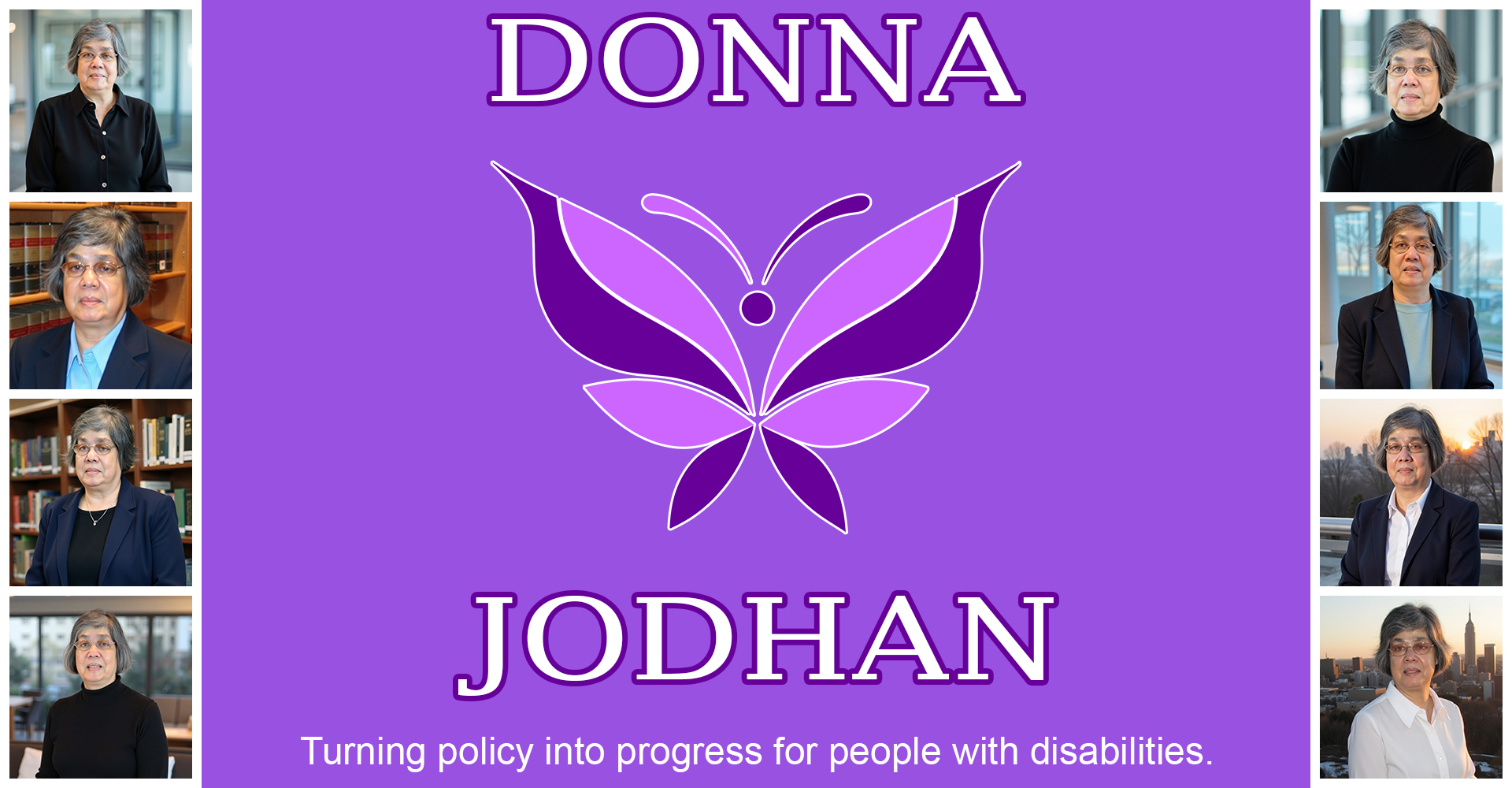
Turning policy into progress for people with disabilities.


Connect With Me:
🌍 Website: https://donnajodhan.com
📧 Email: donna@donnajodhan.com
✏️ Blog (1): https://donnajodhan.com/blog
✏️ Blog (2): https://donnajodhan.com/sterling1
✏️ Blog (3): https://donnajodhan.com/sterling2
✏️ Blog (4): https://donnajodhan.com/blogspot
🛒 Etsy: https://donnajodhan.com/etsy
🎙️ Podcasts (Web): https://donnajodhan.com/podcasts
🎙️ Podcasts (Apple): https://donnajodhan.com/podcasts-apple
🎙️ Podcasts (Amazon): https://donnajodhan.com/podcasts-amazon
🎙️ Podcasts (Spotify): https://donnajodhan.com/podcasts-spotify
🎙️ Podcasts (iHeart): https://donnajodhan.com/podcasts-iheart-radio
💬 Facebook: https://donnajodhan.com/facebook
💬 LinkedIn: https://donnajodhan.com/linkedin
💬 X1 (Formerly Twitter): https://donnajodhan.com/x1
💬 X2 (Formerly Twitter): https://donnajodhan.com/x2
📽️ YouTube: https://donnajodhan.com/youtube
🛜 RSS: https://donnajodhan.com/feed